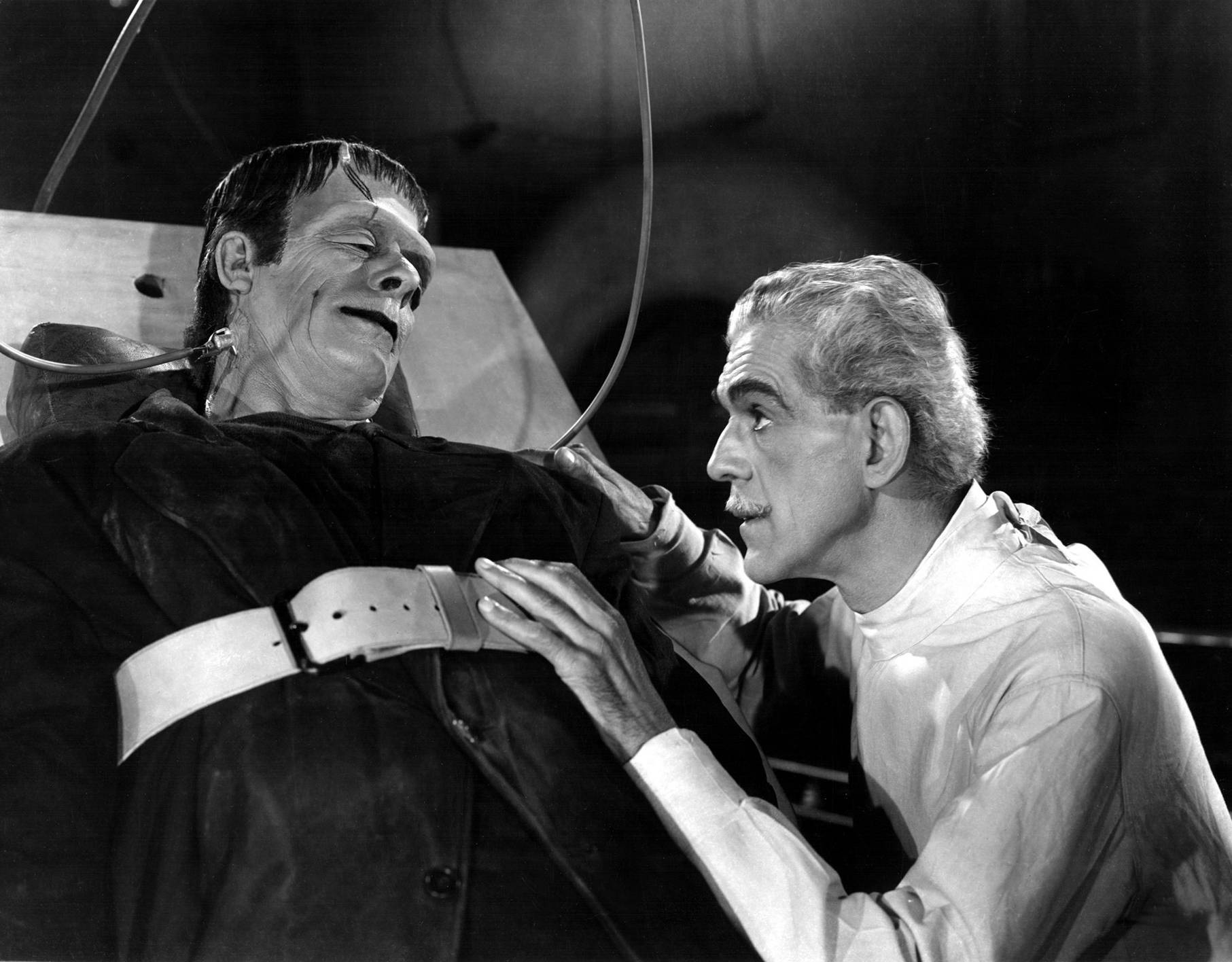
So we just finished the book Frankenstein by Mary Kelley and it was better than I expected. In the last blog, I talked about Frankenstein's creation and how he was relate-able to Adam as a Biblical reference. Well for this one, I'll be focusing more on Victor Frankenstein.
There are many adjectives that could be used to describe Victor, but one of the adjectives that I feel that fits him the best is...Curious. All of his thirst for knowledge stemmed from his curiosity and his feeling of wanting more. His curiosity lead him to great heights in science and eventually to the recreation of human life. One of the games that reminded me of this curious man was a game called, Curiosity - What's Inside the Cube?

This game was rather strange to me at first, but after a few minutes, it was extremely good. Basically, you play as this character who is stuck inside this giant white cube. The cube is made up of smaller cubes as well as different layers. you basically just hit the smaller cubes to make money and buy utensils to break into the next layer. It sounds fairly simple and boring, but it's actually quite the opposite. Each layer has it's own vivid design and the layers have different clues that hint at what's inside the cube. However, it's much easier to play rather than to explain. Anyways, the player in What's Inside the Cube(I'll abbreviate name to WItC since the original name is too long to type every time) is similar to Victor in that they both possess a strong sense of curiosity. The cube in WItC is similar to the creation of the monster in that Victor had to go through many trials and experimentation, just like going through the layers. Each layer is decorated completely different from the others which could represent Victor's knowledge. As he passed through more trials and experiments, his curiosity and knowledge began to expand just like the change in vivid colors deeper inside the cube. The final product of Victor's experiments represent the inside of the cube in that they're both acquired through journeys of hard work and different experiences.


So we've just begun reading Frankenstein after a long month of reading Wuthering Heights.
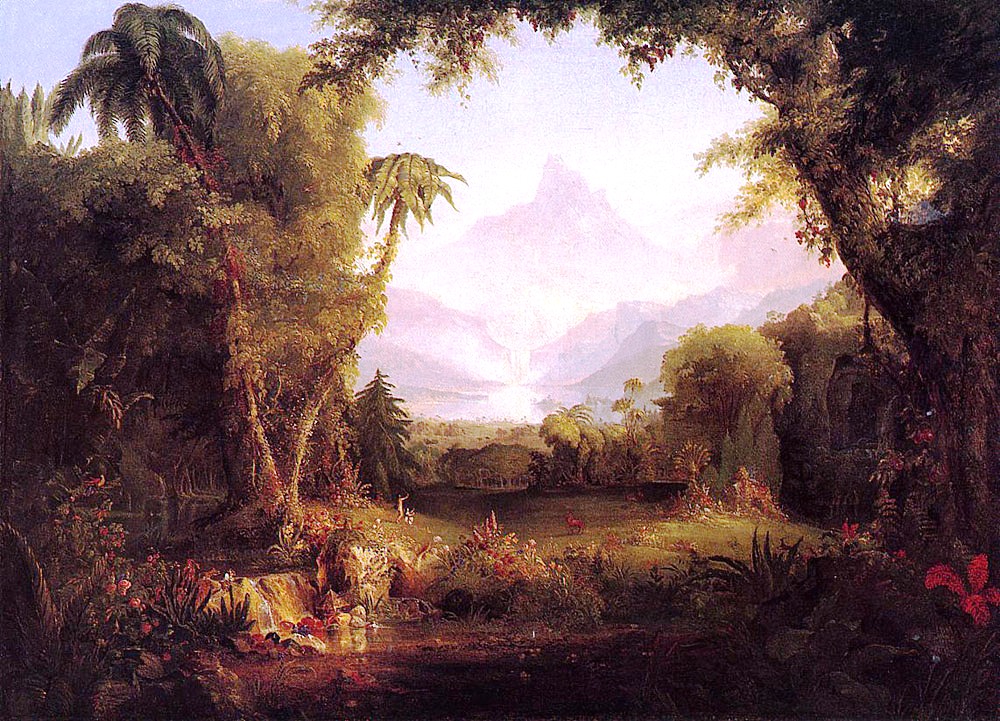
It's like a breath of fresh air since Wuthering Heights occupied most of every English class. The first reading of Frankenstein was decent. I was hoping for something more interesting, but it's been much better than Wuthering Heights so far. The first few chapters helped establish some characteristics and back story to Frankenstein and I'll admit. I always thought that Frankenstein was the name of the creature and not the creator. But anyways, I wasn't really going to relate this to a game because I haven't finished the book nor is there any obvious game reference that came to mind. At first I was going to try and relate this to Wuthering Heights because...you know, there's an obsession and whatever, but there wasn't really anything else to go off of other than that. So instead, i'll try to provide some of my thoughts on the book. so Frankenstein named his creature Adam, and the first thing i thought of was that this was a religious symbol. Frankenstein represented the creator of man(Adam) and the beginning quote also helped establish this, stating that man was molded out of clay. Frankenstein basically spent years his of his life trying to create a creature, kind of like the creation of man, however all the work was for naught since it all ended in disappointment. I don't know if Shelly was naming the creature Adam on purpose, but i wouldn't be surprised if it was. If i remember correctly, Frankenstein later makes a wife for Adam, which may have represented eve because they were both made of the same material. Although the comparisons are a bit strange, they're there, and it was the first thing i thought of when i read the passage.
Well, it's been a while since I've last talked about a retro game, so i'll start it up again. So right now, we're watching Freedom Writers.
I've actually never watched this movie before and the movie so far has been really good. It's about this teacher that tries to change the hearts of the kids in her class by being a good teacher and one that will listen and get things straightened out. Tying this into a game was rather hard, but the one thing that came to mind was Space Invaders.

At first this sounds really stupid and I agree, it does. However, Space Invaders could be taken out of context and be related to this serious movie. In Space Invaders, you play as this ship that shoots a bunch of alien looking things and basically has no story or plot. The objective is to just not die. Well, if we take out the ship and replace it with the teacher, we can see some correspondence. The teacher is fighting off the worries and problems that are plaguing her students. The aliens could represent all the hate that her students feel. And the weapons that the ship uses would be like the lessons and teachings that she does. in order to progress to the next 'level' the teacher must first defeat all the worries in the current level and the boss could represent the lessons in a real life situation. Basically, I guess it would be how the children take what they learned inside and apply it to the outside world. The teacher must avoid the obstacles as well as destroy the bad environment( the invaders). From what I saw in the movie, the moral was that people can always change and a lot of the times, it starts with something small, but affects many people. We could apply this to real life and say that no matter how small of an action that we perform in our everyday life, someone will be impacted by it. Thus all the things we say and do are important and we should always keep that in mind.
Sadly, this will be yet another post that does not include an 8-bit game. Finding a retro game for everything is rather hard, but I'll try my best to accommodate for this later. So we've recently finished a book called Wuthering Heights by Emily Bronte.

It was a rather interesting read to say the least. It wasn't necessarily the best book I've read nor is it the worst. However, many of the things in the book had deep messages that could be applicable to the world that we see today. One of the main events of Wuthering Heights is the change in personality in Heathcliff. Heathcliff was bullied and abused by the adults around him as a child and the environment that he lived in most likely traumatized him. As he grew up, those events were embedded into his mind and he could never forgive the adults, thus causing an urge for revenge on the adults themselves or their children. I feel as though throughout the book, Heathcliff's undying revenge clouded his judgement and in turn damaged the people around him. Heathcliff's personality as well as thought-process reminded me of Ezio Auditore from Assassin's Creed 2.

Not only were they alike in character such as their aggressive nature, short temper, and jealous characteristics, they were affected the same by revenge. Although Ezio's revenge didn't stem from a poor childhood, his actions after the change were parallel with those of Heathcliff. Ezio's revenge was planted into his mind when his father and brothers were betrayed and convicted of a coup d'état. This left him without much a family and he later discovered his family's secret-their allegiance with the Assassins. The death of Ezio's family could be compared to the loss of Heathcliff's childhood innocence, where the family represents the innocence. Ezio's revenge clouded his judgement as an assassin and thus injured the people around him. When Heathcliff changed, his personality repelled those around him and his aggressive nature caused mental and physical wounds to the the environment surround him. They both strived to execute this revenge, however, they realized in the end that the feeling at the end was not worth the journey. This could be a message that is geared toward the human population in that we shouldn't let revenge be the sole purpose of our goals because if it does, it won't be worth it.
So there's basically nothing I can tie into video games from English class, so it's time to go off topic. During the beginning of the year, our class read a short story called Birthday Party by Katharine Brush. It was basically portraying how marriages don't always have happy endings and that people drift apart over time. By giving the characters a very vague mien, people are easily able to relate this shorty story to real life. I didn't relate this story to marriage of any sort per se, but rather, I took in a different context and switched marriage to the topic of marching band. I connected Marching Band Competitions( State Marching Band Championships in particular) to be the husband while the people who make up the different marching bands are the wife. The people who march all give in countless amounts of dedication as well as hard work in order to potentially win first place at the State Championship.
 Just like the wife in the story, we try to please the significant other(in my case, the judges of the State Championships) in that we present them a product and hope for the best. This thought didn't really click for me until yesterday. Yesterday was the State Championships for Kentucky and the marching band I felt as though we played that we could have that night. We've worked hard everyday, doing intense work outs as well as going through strenuous weather conditions. Our journey represents the trek that couples go through and the vain attempts in order to please each other. However, the endings to both stories are different this year, or at least, in my perspective they are. In Birthday Party, the wife is left depressed and ashamed with a hint of being shunned by her husband. Although we may have gotten third in the competition, we were not left in some sorry state. I believe that we performed to the best of our abilities and that it doesn't really matter what those judges think. Thus the correlation between both stories end here...However, next year's competition may speak a different story.

Before I get into this post, i'll have to admit that this game won't be 8-bit or retro, so sorry about that. There hasn't really been much to go off of in English class so far because we've just finished watching a movie called Jane Eyre and have started reading Wuthering Heights.
None of these subjects are really relateable to video games, so I'll try my best. Jane Eyre closer to my topic than Wuthering Heights so I'll just roll with that. The main character in Jane Eyre was sort of "abandoned" at the beginning. Her parents had recently died so she moved in with her aunt and they basically treated her like trash. She later runs away to find her own freedom and it;s basically just this long journey. She was sort of relateable to the main character of Bastion who is nameless throughout the story.
Bastion was a video game created by Supergiant Games for the Xbox, iOS, and computer. The story takes place after a giant calamity and player wakes up in a totally vacant place where just about everyone is reduced to ash. These people would be comparable to the love Jane Eyre received and the Calamity in the game represented the death of Jane Eyre's parents.After the Calamity, the people around the player died and when Jane's parents died, all the love she was suppose to be receiving disappeared. Jane's run-away journey is basically the same as the player's journey in Bastion: they were both looking for someone or something to complete them. The different levels in Bastion represented the journeys that Jane had to go through throughout her life such as the experience with her Aunt, Edward, and St. John. Jane Eyre's experience with the Edward Rochester is also like the Player's adventure in getting crystals to save restore the world. Although it didn't happen at first, Jane later became fixated on Edward, but had to go through rough experiences such as a deceived marriage as well as jealousy with the other marriage candidates. The player had to fight monsters that guarded certain crystals which were essential to restoring the world and that became fixated on that goal. I feel as though both Bastion and Jane Eyre contain a character that is relateable to the average person in that even when times are tough, we should stay headstrong and focus on what's important to us.
Alright so before I get into anything, I'll admit that the game that i'm about to tie in isn't retro. It's not even in 8-bit, but I figured that the story and interpretations of the game would make up for it. So I had some independent reading for class and the book I picked was The Plot Against America, written by Philip Roth.

It was about a Jewish family living in America when Lindbergh was president and how the community around them was basically anti-Jewish. That doesn't really matter right now, but what does matter is that the main character in the book, Philip Roth, starts off as a dependent child and later loses his childhood innocence(I interpreted his stamp collection to be his childhood innocence) as he matures into an independent man later in the book. Finding a book about this topic was extremely hard and I couldn't think of any other English assignment that I've done so far that could be related to games. I finally found one after basically years of thinking and the video game of this week's blog goes to Limbo, developed by Playdead and Double Eleven and is available on the PS3, Xbox 360, Windows, and iOS.

Limbo is a a 2D puzzle game where the player controls a nameless boy that has recently woken up in a forest and tries to find his sister while avoiding traps. This sounds like the average cliché puzzle game, but what makes it stand out from the others is that it's in black and white and there's no dialogue or narration. The interpretation of the game is left to the players and what they want to believe in. Philip Roth from The Plot Against America and the character from Limbo are very similar in that my interpretation of Limbo and the mental journey Philip endures travel parallel. In the beginning of Limbo, the player wakes up in a forest and the trees surrounding him make him look like an ant in comparison.

This setting represented insignificance which is what Philip felt like in the beginning of the book. Philip relied on everyone else's opinion in order to make his own decisions and judgments. The sister at the end of Limbo is what the player strives for which could represent Philip and his strive for independent thinking after being accustomed to his father's biased political views. The traps throughout the game may could also be interpreted as the obstacles Philip Roth faced during his journey through maturity such as the political views of his other siblings and relatives which attempted to sway him to one side or the other. There's also this giant spider in Limbo which is comparable to the Nazi visions that have been plaguing Philips mind at the beginning of the book.

At the end of Limbo, the player finds his sister, but the scene cuts off there and the credits roll. I compared this to the event in The Plot Against America where Philip is kicked in the face by a horse during his running-away-from-home-attempt and loses his stamp collection. The player in Limbo finds his goal, his truth, his freedom while the Philip loses his childhood innocence and begins to mature and become independent. I'd recommend the game to anyone because the artwork is phenomenal and it provides a very unique type of gameplay. The game is like a mix of creepy and depressing artwork, but it's something most people wouldn't expect and that's what made this game stand out to me.
A few days ago, our class read a story called Gooseberries by Anton Chekov. It wasn't really that interesting to be honest, but the message kind of made up for it. In the short story, the speaker is talking about his brother Nikolai. His brother basically becomes obsessed with getting a farm and he treats the others around him poorly and almost kills a women in order to get money for it. In the end, he gets his farm but it's described as being an awful piece of land. The river was polluted and the gooseberries were unripe and sour. I figured that the brother was in denial and lying to himself that everything was perfect...the farm was perfect and that the gooseberries were delicious. I wasn't really sure how to relate any part of this story to a game, so I thought of characters that were like Nikolai, and no one fits his description better than Gary Oak from the Original Pokemon Games. Gary was first seen in Pokemon Red, Blue, and Yellow for the Gameboy Color as well as in the cartoon. Gary didn't treat his Pokemon fairly and he was blinded by his goal to become the best Pokemon trainer ever. He had an aggressive nature and did whatever he could to get what he wanted. Although Gary does indeed become the Pokemon master, he later got destroyed by Ash Ketchum. It's implied that his journey wasn't worth it and that he later realized the mistakes he made after being defeated at the Pokemon League. I feel like Gary and the brother represent parts of our conscience...that they're the thoughts and emotions that take over us when are overly observed with our goals. It's as if Gary and the brother symbolize how we shouldn't let our goals take over us and it's the journey reaching that goal that matters. Although it may not have been the original intent of the game developer, I thought that Gary was a lesson about how the affects of our desires harmed the people around us and that we should just take it slowly and appreciate the present and not obsess too much about the future and our goals. I feel like both of these pieces of work showed this lesson and that we should apply it to our life.

So this next game that I'm about to tie this post into is fairly new; however, it has a retro look as well as an 8-bit feel, so I figured it would be appropriate. So about a week ago, our English class read a short story called Child By Tiger. It was very...unpredictable to say the least. In short, it was about this seemingly harmless man of African descent named Dick living with a White family. He didn't really do anything unusual, except for the fact that he was portrayed as having a stalking-like movement and that sometimes his eyes shined at night. He was ordinary in every other aspect though- he went to Church, did chores, and played with the kids. But then the story went for a sudden turn and the next thing you know, Dick is killing everyone in town. So that had me thinking, what kind of games could I tie in with this? The story was interesting and the plot twist was pretty crazy. Then I remembered that I stumbled upon a game a while back called Hotline Miami. Hotline Miami was published in 2012 for the PC and was created by Dennaton Games. In this game, the character that you play as is anonymous and known only as "Jacket". The character wakes up one day with a Mask and a little list of objectives that you must complete to advance. These masks come in different animals, like the Tiger mask and Unicorn Mask, and they each give the player a different personality. The objectives usually involve killing large amounts of people as well as planning assassinations. So this got me thinking-what's a deeper connection between these two creations other than the obvious that they both have something to do with killing people and tiger personalities. And then I realized there may be a connection to why the characters did what they did. Both the characters were affected by this Tiger-like personality and I thought of it as a symbol for the human consciousness. It's our thoughts that drive us to do what we do and it's affected the characters in similar ways. Tigers are thought of as hunters, predators, killers, and that's what the characters were portrayed as. These people may have started off as the average person, but once they got connected with their other personality,whether it be in the form of a physical material like a mask or maybe just a feeling, their beast-like nature took over. This made me realize that this also applies to real life in that everyone contains a beast-like nature; it's just that people may not realize that they have it and that its affects vary from person to person.


So a few days ago, I had to read a short story called Where are you going, Where have you been by Joyce Carol Oates. Basically, it was about this narcissistic, self-absorbed girl that gets stalked by a man called Arnold Friend and it's inferred that she gets kidnapped at the end. Her attempt at acting like a mature woman backfired and caused her some unwanted attention. When I first read the story I had no clue how I could possibly tie it into a retro game; however, the kidnapping reminded me of a very renowned game: Paper Mario. Paper Mario was originally designed for the Nintendo 64 and it was released in 2000. I realize that Where are you going, Where have you been isn't about some plumber going to different castles and fighting turtles to rescue a princess per se, but there's a similar element in both the short story and Paper Mario. Princess Peach and Connie share a commonality in that they're both kidnapped, portrayed as pretty, and that they try to care for others before themselves. Although Connie may not seem like the type to care for her family, she does so in a faint way. The Antagonist, Arnold Friend, gives Connie the option to save her family or to go with him on a "ride", thus saving her family from possible injury. In the beginning of Paper Mario 64, Mario attempts to save Princess Peach from Bowser, but ends up being quite useless. Peach realizes this and sacrifices herself to Bowser in order attempt to save the rest of her castle. This in turns leads Mario to starting a journey through different castles in order to save the princess, but that's not important for this.

A few days ago, our English class had to read a short story called The Destructors and it was written by Graham Greene during the 1950's. The Destructors was about how these children who were raised in Post World War 2-Germany and the lifestyles they lead. After the Blitzkrieg in Germany, many houses were destroyed which caused the people to live in poor conditions after the incident. I feel as though this is the back story to Greene's story and more than likely, it is. So these kids, most likely pre-teens around 15 judging from their actions, form a gang and grow up in a relatively destroyed area. However, they come in contact with a beautiful house and I guess they're just shocked to see it because they've probably never seen one before. Trying to make a name for their gang, they decide to destroy the historical house which is absolutely ridiculous if you ask me. The story says that they had no motivation for destroying the house- that they just did it for fun, however, my friend managed to convince me that there probably was a "reason" as to why they did what they did. He told me something called the Broken Window theory. Basically, it means that people who grow up in relatively broken areas, such as broken windows on houses, tend to commit more crimes than those who grow up in relatively clean and unbroken areas. So by applying this theory, these kids that more than likely lived in poor areas saw a house that wasn't broken and was kept relatively beautiful and decided to destroy it. The destroying of the house reminded me of a game called Rampage and it was an arcade game made in the late 1980's. There wasn't really a plot to the game, but the style of the game was relatively similar to The Destructors. In the game Rampage, the players pick between three different characters: A gorilla called George, a Dinosaur-lizard called Lizzie, or a Werewolf called Ralph. The players then destroy cities while trying to avoid getting hit by helicopters and other destructive weapons. Although Rampage is quite large scaled compared to The Destructors, they're both similar. The players in Rampage would represent the children from the short story, and the cities the creatures were destroying would represent the beautiful house.
A few days ago, we had to read a short story called, The Most Dangerous Game. It was basically about how a man gets stuck on an island and finds a hunter who has taken hunting to a whole new level. The Hunter's regular animal quarry has bored him and he now hunts people that get stuck on his island. Thus, Rainsford, the man who got stuck on the island, must his hunting experiences to avoid contact with the other hunter for 3 days, using traps and his previous knowledge to survive. This plot reminded me of a game called Spy vs Spy that was originally on the Atari and Commodore 64. The objective in Spy vs. Spy was kind of to trick and hunt the other player. Each player would have a set of items to collect and they would only drop from the other players. In order to get the items, you would have to place traps around the map and try to lure other players into taking the bait. Players who fall for the trap and die drop all their items which then lets other players grab them. The traps in The Most Dangerous Game made me think of Spy vs Spy and the objectives were kind of the same. Both players would try to hunt each other down which leaded to freedom or victory; so in the book, Rainsford would be a spy and Zaroff, the Hunter, would be a spy. Spy vs Spy: The Island Caper would probably be the best game that fits into this because it's the same mechanics and objective, just on an island.